
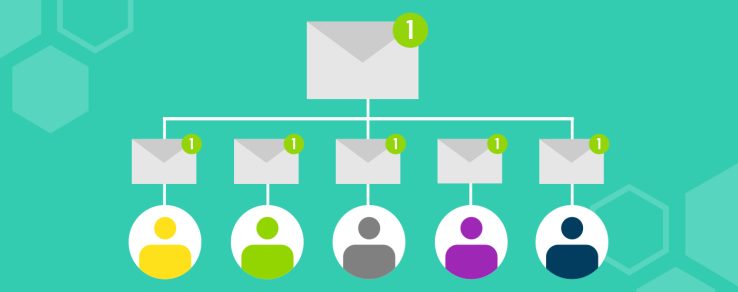
Utilities have access to more customer data than ever before. Yet many utility communicators still rely on one-size-fits-all communications that treat every customer the same.
That’s a missed opportunity for engagement. According to HubSpot, segmented email campaigns achieve 50% higher click-through rates than unsegmented campaigns. Utility-specific results demonstrate this impact as well: AEP Ohio’s industry-segmented newsletters achieved 22% higher open rates and 44% higher click-through rates compared to its unsegmented newsletter.
The good news is that audience segmentation doesn’t have to be complicated. In fact, some of the most effective segments may already be hiding in plain sight.
Here are five utility customer segments you may be overlooking — and the best ways to reach them.
1. New Customers
Moving is one of the most significant moments in a person’s life — and an important customer engagement opportunity for utilities. The start of service gives utilities a chance to make a strong first impression.
New customers are navigating a new home, a new bill and, often, a new utility. They may have questions about billing and payment options, account management, energy efficiency programs, outage communications and other available resources. At the same time, they’re establishing habits that will shape how they interact with their utility for years to come.
Utilities should use this early point of the customer journey to introduce essential resources and encourage behaviors that make future interactions easier. Promoting digital self-service tools, such as My Account and mobile apps, sets the stage for future digital communications.
Effective onboarding campaigns deliver this information gradually throughout a customer’s first few weeks of service rather than overwhelming them all at once. A well-planned Welcome Series should prioritize immediate needs first, such as account access and billing, before introducing energy-saving programs, outage resources and community initiatives.
Customers are particularly receptive to utility communications at the start of service. According to Questline Digital’s 2026 Utility Benchmarks Report, Welcome Series achieved an average 33.16% Click-to-Open Rate (CTOR), making it one of the highest-performing utility communications.
2. Renters vs. Homeowners
Both renters and homeowners represent substantial audiences, but the programs and advice that resonate with each can look very different.
For homeowners, utility communications help to inform bigger, longer-term energy decisions. Because homeowners typically have greater control over their property, they may be able to invest in equipment upgrades or structural energy-efficiency improvements.
Topics of interest to homeowners:
- Home energy assessments
- HVAC rebates and equipment upgrades
- Smart thermostat programs
- Insulation and weatherization incentives
- Solar and battery storage programs
- Electric vehicle charging incentives
Timing can make these messages even more effective. Customers replacing an aging HVAC system or considering home renovations are often more receptive to information about related utility programs. Utilities should use available customer data and behavioral insights to deliver relevant resources when customers are most likely to need them.
Renters have different options for managing their energy use. Although they have limited control over major equipment and structural improvements, they still want manageable bills, a comfortable home and practical ways to be more energy efficient.
Topics of interest to renters:
- Low-cost energy-saving tips
- Portable efficiency products
- Budget-management resources
- Behavioral energy-saving strategies
- Bill assistance and payment options
Utilities should clarify which programs require landlord participation and provide resources renters can share with property owners. For multifamily properties, there may be additional opportunities to engage landlords and property managers.
3. High Energy Users and High Bill Customers
Customers with consistently high energy consumption are an important segment to reach with proactive communications.
According to J.D. Power’s 2025 U.S. Electric Utility Residential Customer Satisfaction Study, average monthly residential electric utility costs reached $189 in 2025, up 34% since 2020. Utilities can help customers better understand and manage their consumption with personalized usage information, energy-saving recommendations and relevant programs.
High energy users benefit from:
- Personalized energy reports
- Home energy assessments
- Budget billing
- Energy efficiency rebates
- Smart thermostat incentives
- Personalized energy-saving recommendations
- High-usage alerts and usage monitoring tools
Communications should explain where energy is being used, compare usage over time and suggest practical ways to reduce consumption.
But usage alone doesn’t tell the whole story. Utilities should distinguish between customers with consistently high consumption and those experiencing a temporary bill spike. A customer might receive an unusually high bill because of extreme weather, schedule changes or a malfunctioning HVAC system, for example.
Targeted communications help customers understand:
- Why their bill increased
- How weather or seasonal usage affected costs
- Available payment assistance options
- Online usage monitoring tools
Reaching out shortly after a significant bill increase helps to reduce confusion before customers contact their utility’s call center. A simple explanation of why costs changed, combined with actionable resources, demonstrates that their utility is committed to helping them manage energy costs.
4. Digital Adopters
Not every customer engages with their utility in the same way. Some customers consistently log in to their online account, pay bills digitally, use a mobile app and interact with text messages. These behaviors help utilities identify customers who may be receptive to additional digital tools and services.
According to J.D. Power’s 2026 U.S. Utility Digital Experience Study, mobile apps earned the highest satisfaction scores among utility digital channels, yet 28% of utilities studied still don’t offer one.
Digital adopters are often interested in:
- Paperless billing and autopay
- Mobile app downloads and new features
- Self-service account management tools
- Personalized energy insights
- Digital outage alerts and notifications
- Pilot programs for new digital experiences
These customers provide valuable feedback on new programs and technologies. Rather than promoting every new digital offering to the entire customer base, utilities should first engage digital adopters who are more likely to explore and adopt new tools.
At the same time, utilities should recognize that not every customer is ready for a fully digital experience. Some customers still prefer printed bills, phone support or in-person assistance. Effective segmentation allows utilities to encourage digital adoption while continuing to meet customers through their preferred communication channels.
5. Customers Who Don’t Engage
Sometimes the most valuable audience to analyze is the one that isn’t responding.
Every utility has customers who rarely open emails, ignore text messages or never log in to their online account. It’s easy to assume these customers simply aren’t interested, but low engagement may signal that communications aren’t reaching them through the right channel or with a message that resonates.
Rather than continuing to send the same messages and hoping for different results, utilities should use engagement data to identify customers who may benefit from a different communication strategy.
To engage these customers, try:
- Testing alternative channels, such as direct mail, SMS or outbound calls
- Adjusting messaging frequency to reduce communication fatigue
- Simplifying subject lines and calls to action
- Sending shorter, more focused communications
- Re-evaluating whether content reflects their needs and interests
What customers don’t engage with can be just as revealing as what they do. For example, if a group consistently ignores rebate promotions but engages with outage updates, reliability-related information may be more relevant than energy efficiency messaging. These behavioral signals can help utilities better understand customer interests and tailor future communications accordingly.
It’s also important to distinguish between customers who are temporarily disengaged and those who have become consistently inactive over time. Monitoring engagement trends gives utilities a clearer indication of when to adjust their approach before customers tune out altogether.
By identifying these customers, utilities have the opportunity to improve message effectiveness, strengthen customer relationships and help ensure important information reaches the people who need it most.
Smarter Segmentation, More Relevant Communications
Utilities don’t need dozens of complex audience segments to make communications more relevant. In many cases, the customer data they already have can reveal meaningful differences in needs, behaviors and preferences.
The key is turning those insights into action. By identifying a few high-value customer groups and tailoring communications accordingly, utilities can deliver more useful information, promote the right programs and create stronger connections throughout the customer journey.