What if utility customers could understand the purpose of your email without ever reading the full message?

This scenario is becoming increasingly common as artificial intelligence (AI) transforms the inbox experience. Major email providers, including Gmail, Apple Mail and Microsoft Outlook, now use AI to prioritize messages, generate summaries and help users quickly identify what matters most.

This shift is making AI email optimization for utilities increasingly important for message visibility and customer understanding.   

How AI is Reshaping Inboxes

Gmail, Apple Mail and Microsoft Outlook each approach AI differently. Understanding how these platforms work can help utility communicators adapt to the evolving inbox experience.

Gmail: AI summaries help customers quickly understand email content, but only after opening the message. This means subject lines and preview text remain critical for attracting attention and encouraging opens.

Apple Mail: AI-generated summaries can appear before customers open an email, giving Apple Intelligence greater influence over the first impression customers receive.

Microsoft Outlook: Copilot helps users navigate longer emails and conversations by summarizing content and identifying key actions.

What this means for utility communicators: Customers may consume email differently depending on their inbox provider, but clear messaging, strong organization and relevant content remain essential across every platform.

As AI in utility emails become more widespread, utility communicators must rethink how they structure email messages.

Here are five best practices for optimizing emails for AI-powered inboxes. 

1. Send Fewer, More Relevant Emails

Emerging AI-powered inbox experiences are moving beyond simple inbox tabs and folders, using personalization and predicted relevance to help determine which messages receive visibility.

In a recent Validity webinar, State of Email Tactics, marketing leaders shared how messages that consistently align with customer interests and needs are more likely to be viewed as valuable.

Inbox providers are using AI to help users prioritize messages that are most relevant to them. For example, Gmail prompts users to unsubscribe from senders whose emails they rarely engage with, making it easier to reduce inbox clutter. Gmail has also introduced features that prioritize and reorder messages based on predicted relevance and importance.

These developments reinforce a new reality for utility communicators: Messages that consistently provide value are more likely to remain visible, while less engaging emails could receive less attention over time.

Relevant and timely communications include:

  • Outage updates sent only to affected customers
  • High-bill alerts or energy usage insights based on a customer’s data 
  • Seasonal energy efficiency tips tailored to homeowners or renters
  • Electric vehicle rebate promotions targeted to EV owners
  • Financial assistance program reminders to eligible customers
  • Water conservation tips during peak summer usage
  • Welcome communications to new and moving customers

Utilities that continue relying on one-size-fits-all communications could struggle to stand out in increasingly personalized inbox environments. That’s why AI email optimization for utilities is more important than ever.

2. Think Like a Journalist 

AI tools are designed to quickly identify and surface the most important information within an email. That’s why utility communicators should think like journalists in a newsroom. The message should begin with the most valuable information, following by supporting details.  

Prioritize these elements near the top of a utility email:   

  • The primary purpose of the communication
  • Key dates, deadlines or restoration timelines
  • Customer actions that need to be taken
  • Important program benefits for customers
  • Links to additional resources or next steps

For example, a promotional utility email should quickly explain the program, benefits and what actions a customer needs to take. Likewise, communications about Time-of-Use rate plans should immediately explain what’s changing, how customers will be affected and what steps they need to take to manage their energy usage.   

By presenting the most important information upfront, utilities can help both customers and AI quickly understand the purpose of the message.

3. Avoid Technical Jargon

Utility communications often contain complex information, regulatory language and industry-specific acronyms. While these terms may be familiar to utility professionals, they can create barriers to understanding for both customers and AI in utility emails.

How utility communicators can improve readability:

  • Use simple, customer-friendly language
  • Keep sentences concise and focused
  • Explain technical terms and acronyms when necessary
  • Focus on customer benefits and impacts
  • Replace industry jargon with plain-language alternatives (when possible)

For example, an email about a demand response event should focus on what it means for customers and the actions they need to take. Similarly, communications about financial assistance programs or energy efficiency rebates should highlight key benefits, important deadlines and next steps rather than lengthy and complicated program descriptions.   

When drafting emails, utility communicators should focus on clarity and simplicity. AI tools perform best when content is straightforward and easy to understand.

4. Make Your Emails Easy to Scan   

Just as customers often scan emails instead of reading every word, AI uses headings, formatting and content hierarchy to quickly identify the most important information. As a result, email structure matters more than ever for AI in utility emails.

A poorly organized email can make it difficult for both customers and AI tools to quickly understand the purpose of the message. Long blocks of text, inconsistent formatting and multiple competing messages can obscure key information and reduce the effectiveness of AI-generated summaries.

It’s also important to avoid building emails entirely out of images. While image-heavy designs look polished, AI tools need readable HTML text to understand the message. If the most important copy is embedded only within a graphic, AI may not be able to interpret the copy.

Images can still enhance an email’s design, but essential details — such as program benefits, eligibility requirements and calls to action — should appear as readable text.

To make emails more scannable, consider using:

  • Descriptive headings that clearly identify each section
  • Short paragraphs focused on a single topic
  • Bullet points to highlight key information
  • Clear, action-oriented calls to action
  • Consistent formatting throughout the message
  • White space to improve readability and reduce visual clutter

For example, an outage communication might include separate sections for outage details, restoration timelines and customer resources. A program promotion could use headings to highlight benefits, eligibility requirements and step-by-step enrollment instructions.

Well-structured content helps improve readability for customers and AI email optimization for utilities.

5. Don’t Overlook the Subject Line & Preview Text

Subject lines play a powerful role in helping AI understand, categorize and prioritize email content. They provide immediate context about the purpose of an email and help determine whether a customer opens the message, ignores it or takes action.

A vague subject line such as “Important Information” or “Utility News” provides little context about the message itself. As a result, customers may overlook the email, and AI may have less information available when generating summaries.

Instead, utility communicators should use subject lines that clearly communicate the purpose of the message and set expectations for what customers will find inside. The best subject lines are specific, concise and customer focused.  

Additionally, preview text deserves just as much attention as the subject line. Often displayed alongside the subject line, preview text can provide additional context and help AI in utility emails better understand the value of the message.

Effective subject lines + preview text examples:

Planned Water Service Interruption on Tuesday
Learn when service will be affected and how to prepare.

Enroll in Budget Billing Before Summer
Spread seasonal energy costs into predictable monthly payments.

New Time-of-Rate Plan Starts July 1 
Understand off-peak pricing and opportunities for energy savings. 

Outage Update: Estimated Restoration by 8:00 PM 
View outage details, restoration progress and available resources.

New Rebate Available for EV Owners
See if you qualify and learn how to apply today.

Explore Summer Water Conservation Tips  
Small changes can help reduce water use and lower costs.

Together, subject lines and preview text create the first impression that AI uses to evaluate an email.

The Inbox is Changing – Great Communication Isn’t

As inbox experiences continue to evolve, AI email optimization for utilities will be essential. Utilities that communicate clearly, prioritize critical information and structure messages for easy understanding will be better positioned to maintain visibility in email inboxes.

The future of email isn’t just about reaching the inbox — it’s about ensuring customers understand the message, even when AI helps deliver it.

Prepare for What’s Next

AI inboxes are just one example of how customer communications are evolving.

Questline Digital is here to help your team navigate emerging AI technologies, optimize utility emails and drive stronger engagement.

Utility communicators face a common challenge: How do you increase customer engagement without sending more emails, adding complexity or overwhelming busy teams?

That’s the focus of Episode Two of Questline Digital’s Powering Engagement Podcast Series, Smarter Targeting & Optimization. Building on the fundamentals discussed in the first episode, the conversation explores how utilities can move beyond simply sending campaigns to create more intentional, data-driven communications.

Our team of experts explores how utilities can create more effective email campaigns that truly resonate with customers.

Smarter Targeting Starts with Segmentation

When thinking about sending a message to customers, utility communicators should first ask, “Who actually needs this email?”

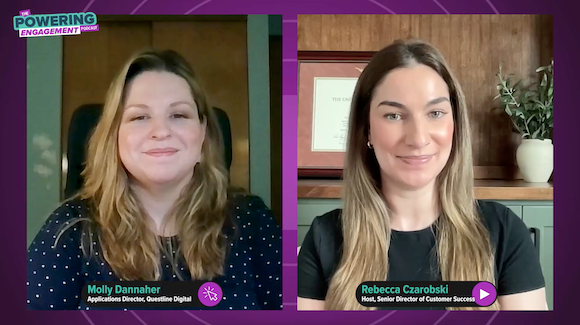
According to Molly Dannaher, Questline Digital’s Applications Director, one of the most common communication challenges that utilities face is ensuring the right message reaches the right customer at the right time.

This is where segmentation becomes essential.

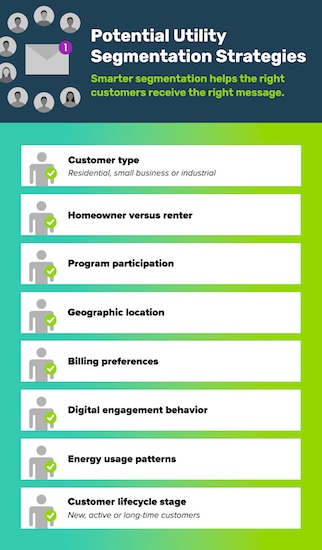
For some utilities, segmentation may be as simple as targeting newly enrolled customers with onboarding information. For others, it may involve more sophisticated audience criteria, such as identifying customers who recently opened an email, have overdue balances and live in zip codes that qualify for payment assistance programs.

While segmentation is often perceived as complex, Dannaher explains that the concept is actually quite simple: Deliver more relevant communications to the customers who need them most.

Without segmentation, utilities often send the same message to every customer, regardless of whether the information actually applies to them. Over time, this one-size-fits-all approach can lead to lower engagement and missed opportunities to connect with customers.

“Customers can experience message fatigue when messages don’t align with who they are and what’s important to them,” Dannaher explains.

Discussion of how utilities can use segmentation in email marketing

Segmentation is becoming increasingly important as customers have come to expect personalized experiences in nearly every aspect of their lives. When communications don’t feel relevant, customers are more likely to ignore them — or stop engaging altogether.

Fortunately, utilities don’t need complex strategies to get started.

Dannaher encourages utility communicators to look beyond basic demographic data and pay closer attention to customer behavior. Who is opening emails? Which topics generate engagement? Which customers consistently ignore messages?

Dannaher also recommends following up with customers who didn’t open an important email. In many cases, knowing who doesn’t engage can be just as valuable as knowing who does.

These insights can help utilities create more targeted communication strategies while supporting broader utility goals.

“When we segment, we see more engagement, less confusion, fewer questions and utility call centers often experience a reduction in customer calls,” Dannaher says. “Less customer confusion leads to better adoption of your programs and overall better customer engagement scores.” 

Personalization Ensures Relevance

Once utilities identify the right audience, the next step is crafting a message that feels relevant to the person receiving it.

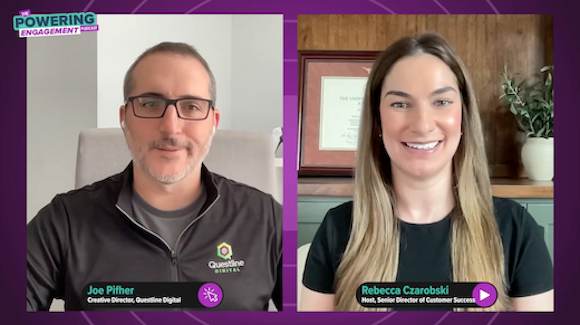
According to Joe Pifher, Questline Digital’s Creative Director, personalization is often misunderstood. Many marketers associate personalization with inserting a customer’s first name into an email. While that tactic has its place, Pifher notes that meaningful personalization goes much deeper.

“Personalization is removing all that noise,” he says. “You want to make sure that your customers only see what’s relevant to them.”

Discussion of improving personalization in utility emails

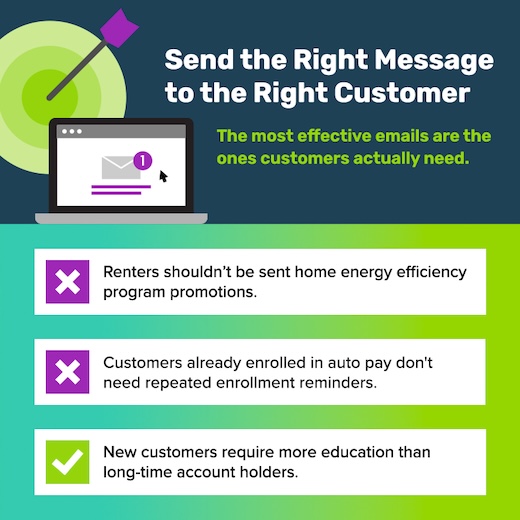
For utilities, personalization and segmentation work hand in hand. A customer already enrolled in a program doesn’t need the same message as someone considering enrollment for the first time. Likewise, customers who don’t qualify for a program shouldn’t receive an email about it.   

Rather than creating dozens of different emails, Pifher encourages communicators to focus on tailoring the message to an audience’s specific needs and circumstances. “When you’re doing that well, the message is going to resonate with your customers,” he says.Unlike traditional marketing campaigns, utility communications often involve topics customers genuinely care about, including service reliability, financial assistance and energy savings. And these topics require a different approach to communications.  

Instead of relying on marketing jargon or overly clever language, utility communicators should focus on providing straightforward information that helps customers make informed decisions.

“When you write from a place of being calm, clear and helpful, your customers are going to relax and you’re going to build trust,” Pifher says.

Clarity Beats Cleverness  

The same principle also applies to email structure. Most customers aren’t reading every word of a message – they’re quickly scanning for the information that matters most to them.

According to Pifher, customers are typically looking for answers to three questions:

  • What is this?
  • Does it apply to me?
  • What do I need to do?

The faster an email answers those questions, the more effective it becomes. As AI-powered inboxes continue to evolve, clarity will become even more important for utility emails.

“Clarity beats cleverness,” Pifher says. “As a creative, I hate that because I would love to be clever in all my emails. But we’re finding that just being clear is more effective.”

When discussing best practices, Pifher offers one piece of advice utility communicators can apply immediately.

“My number one rule is one audience and one goal per email,” he says. “If everything’s important, nothing’s important.”

Utilities often attempt to include multiple announcements, programs and calls to action within a single communication. The result is a message that tries to accomplish too much – but ultimately accomplishes less. 

Instead, Pifher recommends focusing on a single audience, objective and primary call to action. This approach creates clearer performance metrics and stronger engagement over time.

Drive Stronger Results With A/B Testing

Once utilities have defined their audience and crafted a relevant message, the last step is optimization.

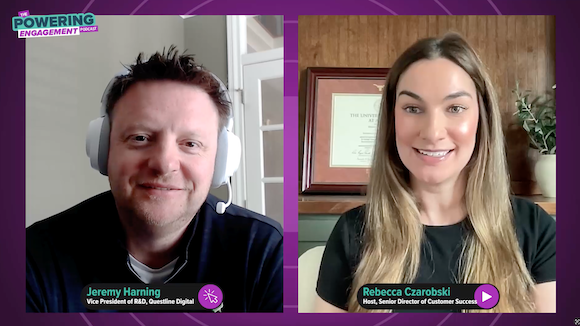
Many utility communicators hear the term “A/B testing” and immediately think of additional work, complicated reporting or difficult-to-interpret results. However, Jeremy Harning, Questline Digital’s Vice President of Research & Development, encourages utility teams to think about testing differently.

At its core, A/B testing answers a simple question: What actually resonates with your audience?

“The way that I think about testing is that you’re always trying to move the needle toward perfection,” Harning says. “We know we can’t always get there, but we can make small improvements over time that help us get closer to the best results possible.”

Discussion of using AB testing to improve utility email communications

Rather than randomly changing elements from one campaign to the next, A/B testing allows utilities to make data-driven decisions based on customer behavior. Every email becomes an opportunity to learn something new and apply those insights to future communications.

When open rates are lower than expected, Harning recommends starting with the two factors that influence opens the most: sender name and subject line.

If customers are opening emails but not taking action, the focus then shifts to different elements within the message.

“If we’re getting good attention on our emails, but we’re not getting the action we want, that’s where we start looking at the CTA language, placement and the number of calls to action,” Harning explains.

Timing is another area where utilities frequently look for answers.

“There is no magic send time,” Harning says. “But there are things we can do to move the needle.”

According to Harning, utilities should avoid sending emails at the top of the hour, when countless marketing platforms are deploying messages simultaneously. Instead, consider scheduling communications at less conventional times to help your email stand out in a crowded inbox.

Most importantly, he encourages utilities to view testing as an ongoing process rather than a one-time exercise.

“It’s about consistency, documenting what happened and reusing what you’ve learned,” Harning says. “Every time we communicate, we should learn something from it and use that information to do better next time.”

Over time, those small insights become a valuable playbook that helps utilities continuously improve engagement, drive stronger results and create more effective communications.

Turn Insights into Action   

One of the most valuable takeaways from Episode Two is that utilities don’t need to overhaul their communication programs to improve engagement.

Small adjustment, like segmenting audiences, leveraging behavioral data and simplifying messaging, can make a big difference.

Want to learn more about audience segmentation, personalization and optimization?

Watch Episode Two of the Powering Engagement Podcast Series to hear the full conversation and discover practical strategies your team can implement right away.

Utilities have no shortage of ways to communicate with customers. However, building strong customer relationships is becoming more challenging than ever. That’s where utility podcasts can make an impact.  

Once considered a niche platform, podcasts are emerging as a powerful communication channel for utilities. In fact, podcasts can increase brand awareness by 24% to 79%, depending on the industry, significantly outperforming many traditional communications.

By combining education, conversation and storytelling, utility podcasts offer a unique opportunity to create more engaging customer experiences.

“Podcasts give utilities something other channels don’t offer – time and a chance to truly connect,” says Chris Loehrer, Questline Digital’s Digital Multimedia Events Manager. “With email or social media, you only have so much space. With a podcast, your audience has already decided to invest time to learn about a topic. That changes everything.”

From Transactions to Conversations

Many utility communications are inherently transactional – designed to inform customers about a program, bill or service update. While these messages are essential, they don’t typically foster an emotional connection.

Instead of one-way communication, utility podcasts create space for more meaningful engagement. Utility communicators can explore topics in greater depth, provide context and highlight the people behind the organization.

Podcasts for utility customer engagement are also less promotional than traditional channels like email, digital ads and bill inserts. The American Marketing Association acknowledges how podcasts can reinforce your marketing message without coming across as too sales minded. Rather than prompting immediate action, they focus on delivering value, giving customers the opportunity to learn without pressure.

“It’s a different mindset,” Loehrer says. “With a podcast, people are there to receive information, not to be asked to take action. That’s actually refreshing for them.”

Podcasts enable utilities to:

  • Build trust through transparency and in-depth conversations  
  • Improve understanding of complex topics
  • Create more human, authentic connections
  • Reach customers in a flexible, on-demand format  

Utility industry podcasting also offers a strong return on investment. A single episode can be repurposed across channels, extending reach and delivering ongoing value long after it’s published.

While podcasts are less promotional in nature, they can still introduce customers to products, programs and services they may not have discovered otherwise. In fact, according to Influencer MarketingHub, 60% of podcast listeners searched for a product after hearing about it during a podcast episode.

“Right now, podcasting is one of the lowest-investment, highest-return opportunities in a utility’s communication strategy,” Loehrer notes.

Meeting Customers Where They Are

Today’s consumers expect flexibility in how and when they engage with content.

Utility podcasts fit seamlessly into modern lifestyles, allowing residential and business customers to listen on their own time, whether commuting, relaxing at home or completing everyday tasks. This makes the experience feel less intrusive and more intentional.

“Podcasts meet customers where they already are,” Loehrer says. “They can tune in whenever it’s convenient, which makes it easier for utilities to stay connected without adding more noise to already crowded inboxes.”

Podcast listeners also tend to be highly engaged. They’ve made a conscious decision to invest time in a topic, which reinforces key messages without contributing to digital fatigue.

This creates an opportunity to integrate podcasts for utility customer engagement into a broader, multichannel strategy. A single episode can serve as the foundation for:

• Social media clips
• Email highlights and newsletter features
• Blog articles and web content
• Short-form videos and promotional teasers

Utility podcasts become a scalable content engine, helping utilities maintain a consistent presence without significantly increasing workload. “One conversation can fuel weeks of content,” Loehrer notes.

How Utility Podcasts Can Simplify Complex Topics

Utilities regularly communicate about complex topics, including rate plans, energy efficiency programs, grid modernization and emerging technologies. These topics can be difficult to explain in a short email or social media post. 

Utility podcasts offer the time and flexibility to break down these topics in an easy-to-understand way. Through interviews, storytelling and real-world examples, podcasts make technical concepts more relatable to both business and residential customers.   

“The utility space is a bit of a mystery to people,” Loehrer says. “A podcast allows you to take a complex, but logical, industry and explain it in layman’s terms. That helps reduce misunderstanding and even some of the emotional reactions that customers may have.”

This increased understanding has a direct impact on customer behavior. When customers feel informed, they are more likely to enroll in a program, adjust their usage habits or take advantage of new technologies.

Authentic and Transparent Conversations   

For many customers, utilities can feel like large, faceless organizations. Utility industry podcasting shifts that perception by creating space for authentic, transparent conversations.

By featuring employees, customers and community partners, utilities can provide a more human view of their organization. These conversations help demystify how utilities operate and highlight the expertise that goes into serving the community.

Beyond internal voices, utility podcasts also open the door to a broader range of perspectives, including local legislators, regulators and government officials. Through conversations with key stakeholders, utilities can provide valuable context around policies, infrastructure investments and sustainability initiatives that directly impact customers.

“Podcasting creates a unique platform for thought leadership — giving utilities the opportunity to bring in legislators, regulators and community stakeholders for meaningful conversations,” Loehrer says. “It’s a chance to provide transparency, ask important questions and connect policy decisions to real customer impact.”

Connecting Utility Podcasts with Your Communications

For utilities, the key to success isn’t just launching a podcast, it’s integrating it into a broader communication strategy.

“A podcast can’t stand alone,” Loehrer explains. “It has to be part of your overall communication strategy — connected to your newsletters, your emails, your social channels. It’s another touchpoint, not a separate effort.”

When approached this way, podcasts for utility customer engagement become a natural extension of existing communications. In fact, some of the most valuable podcast topics are already hiding in plain sight.

Loehrer recommends starting with what you already know — your communication strategy and the questions customers are consistently asking. Common call center inquiries, recurring customer concerns and key campaign messages can all serve as strong foundations for utility podcast episodes.

Like any communication channel, success ultimately depends on clearly defined goals. Rather than focusing solely on downloads or views, utilities should evaluate how podcasts contribute to broader outcomes, like improved customer understanding, increased engagement or reduced call center inquiries.

“You have to determine your Key Performance Indicators (KPIs) first,” Loehrer explains. “Are you trying to reduce call volume? Increase engagement? Improve understanding? Your podcast should be built to support those goals.”

Building Connections

As utilities continue to navigate evolving customer expectations, building strong relationships has never been more important. Utility industry podcasting can help utilities move beyond transactional messages and create a more customer-centered experience.

“Utilities have an incredible opportunity to connect with their customers in new ways,” Loehrer says. “Podcasting is one of the most effective ways to build that connection and turn everyday communication into something more impactful.”


You’re closer than you think to launching a successful utility podcast series.

Questline Digital can help you bring it to life — from strategy and content development to production and promotion.

Learn more about our Podcast Production Services exclusively for utilities.  

Utilities send millions of customer communications every year, from billing notifications and outage alerts to program promotions and educational newsletters. Yet many utility marketers still struggle to answer a critical question: Are these messages actually influencing customer behavior?

Measuring utility customer engagement goes beyond email open rates and webpage clicks. The ultimate goal is helping customers take action, whether enrolling in paperless billing, signing up for financial assistance or participating in energy efficiency or water conservation programs.

To truly improve participation, utilities must look beyond traditional marketing metrics and adopt a more data-driven approach — one that connects communications with the latest customer information.

“Utilities have more opportunities than ever to connect with customers,” says Brian Lindamood, Executive Vice President at Questline Digital. “The challenge isn’t just sending communications, it’s making sure those messages are actually relevant to customers’ needs and interests.”

Meeting Customer Expectations for Targeted Messages

Customer expectations for utility communications have evolved over the past several years. Today’s consumers interact daily with companies like Amazon, Apple and other leading brands that have set a new standard for personalized communications.

These companies use data to deliver highly targeted messages — from customized product recommendations to mobile notifications about order updates or rewards programs. As a result, consumers have grown accustomed to receiving information that reflects their preferences, behaviors and immediate needs.

The same expectations are increasingly shaping how customers engage with their utility providers.

“Customers today are accustomed to highly personalized communication from the brands they interact with every day,” says Mark Wilkinson, Executive Vice President at Advanced Utility Systems. “Modern brands have trained consumers to expect relevant information that reflects what they’re experiencing in the moment. Utilities have access to a tremendous amount of customer information. When that data is used effectively, it can power communications that are far more meaningful to the customer.”

While utilities operate differently than retail and technology companies, customers still expect communications that are timely, relevant and easy to act on. Generic, one-size-fits-all messages are becoming less effective as customers look for content that directly relates to their actual usage, billing situation and program eligibility.    

Data-driven communications can help utilities meet these evolving expectations. By leveraging insights from billing systems, customer interactions and energy usage data, utilities can deliver messages that are better aligned with each customer’s unique situation. For example, utilities can use data to proactively share financial assistance resources with customers who may have fallen behind on their energy bill payments.  

“Relevance is what drives engagement,” Lindamood explains. “When utilities communicate with customers at the right moment — whether it’s during a billing cycle, after a service interaction or when a program could help them — those messages become far more impactful.”

When utilities communicate with the same level of personalization that customers experience from other trusted brands, they create stronger engagement, build greater trust and help customers make more informed decisions.

Relevant Outreach Will Improve Utility Communications

Every department within a utility interacts with customers in different ways.

Billing teams monitor account activity, payment patterns and enrollment in programs like paperless billing and auto pay. Customer service teams interact directly with customers, answering questions about bills, programs and account management. Meanwhile, marketing teams develop campaigns designed to inform, educate and engage customers.

Individually, each team holds valuable information about customer behavior. But when these insights remain isolated within departments, utilities miss opportunities to improve utility communications with more effective messages.

For example, when a customer calls with questions about a high bill, customer service representatives have access to valuable information about their usage trends, payment history and whether they’re enrolled in specific programs or services. When representatives use that information to trigger helpful communications — such as energy efficiency tips or assistance programs — it creates a great customer experience.

“Billing and customer service teams interact with customers every day, and they often have insights that communications teams don’t see,” Wilkinson says. “When those insights are shared across departments, utilities can better align their communications with the needs of their customers.”

Turning Customer Data into Program Participation

Utilities across the country offer programs designed to help customers manage costs, improve efficiency and take advantage of digital account management tools. However, many utilities struggle to achieve a desired level of participation.

Data-driven communications can help utilities better understand the customer journey from receiving a marketing message to ultimately enrolling in a program.

For example, if a campaign promoting paperless billing generates strong open rates but low enrollment, the issue may not be the message itself. Instead, there may be friction in the enrollment process, confusion about benefits or the program may not be relevant to a particular customer.   

“Customers are far more likely to engage with information that arrives at the moment they need it,” Wilkinson says. “When communications are timely and connected to what the customer is experiencing, open rates increase, trust grows and customers are more likely to act on the information.”

To help utilities improve engagement and program participation, Advanced Utility Systems and Questline Digital developed Customer IQ, a tool designed to bridge the gap between customer information and customer communications.

Through a centralized dashboard, utility teams can see program participation data and quickly identify opportunities to increase customer understanding and improve enrollment. From there, they can easily launch ready-to-deploy campaigns to educate customers and drive conversions.

“Customer IQ helps utilities connect communications with the customer data in their CIS,” Wilkinson explains. “Utilities can identify which customers would benefit from specific programs and deliver personalized communications that encourage action.”

Customer IQ also helps align teams across the organization. Billing, customer service and communications teams can access insights about customer behavior and program performance, making it easier to coordinate strategies and improve utility communications.

“Utilities already have a tremendous amount of data about their customers,” Wilkinson says. “The key is putting that data to work so communications are timely, relevant and connected to the actions customers are most likely to take.”

Communications Powered by Real Customer Insights

As utilities introduce new programs, services and digital tools, effective communication will play an increasingly important role in helping customers understand their options.

For continued success in the future, utilities must embrace a data-driven approach to customer engagement, connecting communications strategies with real customer insights.

“The utilities seeing the strongest engagement today are the ones using data to guide their communication strategies,” Lindamood says. “When communications are informed by customer information, they become far more effective at building relationships and encouraging participation in programs.”

See How Customer IQ Can Help Improve Utility Communications

Contact your Questline Digital account representative or reach out to our team today.

Public power utilities play a vital role in the communities they serve. However, many customers don’t realize what makes public power utilities unique — or how these differences benefit their daily lives.

Discover public power communication strategies to help your utility strengthen its narrative and showcase the value of public power.

Why Public Power Matters

One of the defining qualities of public power is its connection to the community. Serving more than 55 million people across the United States, public power utilities help to strengthen the communities they serve.

According to the American Public Power Association, there are more than 2,000 public power utilities across the country. Owned and operated by local government, their mission is aligned with what matters most to customers — reliable service, fair rates and long-term community wellbeing.

When customers realize they have a voice in their utility’s direction — and that revenue stays within the community — they see the true value of local ownership. Public power communications help customers understand that decisions are made with their best interests in mind.

To tell a more compelling story, utilities must consistently communicate about the key distinctions of public power – and how these differences benefit customers. The benefits of public power communication include increased awareness, stronger trust and a clearer understanding of how community-focused utilities deliver value.

Promote Greater Transparency

Since public power utilities aren’t accountable to shareholders or investors, residential and business customers have a strong voice in daily operations. Meetings, budgets and major decisions are typically made public, allowing customers to stay informed, ask questions and participate in the planning process. From rate plans to sustainability goals, every decision stays close to home and reflects the community’s values. 

Utilities can reinforce this message in public power communications by regularly sharing updates from board meetings, explaining decision-making processes and inviting customers to participate in planning efforts. Proactively communicating about upcoming projects, rate changes and clean energy initiatives helps keep customers informed and engaged.

Colorado Springs Utilities’ Building the Future page provides customers with a direct look at the utility’s infrastructure plans and investments, helping the community understand why major projects are happening and how they support long-term reliability.

This public power communications example explains how the utility is maintaining and improving critical systems to meet regulatory requirements and future demand. Through clear, easy-to-understand language, Colorado Springs Utilities gives customers context around complex initiatives, like budget planning, infrastructure upgrades and long-range projects like a natural gas expansion project. The utility connects these investments to customer outcomes — reliability, regulatory compliance and serving a growing population.

Example of a public power communications website page
Example of a natural gas public power communications web page

Show the Local Impact

Because public power utilities reinvest their revenue locally, they have a profound impact on economic development. They support local jobs, attract new businesses and contribute significantly to city and state budgets.

Public power communication strategies around this economic benefit help customers understand that paying their bill does more than keep the lights on — it supports the long-term health of their community.

Stories about partnerships with local businesses, investments in infrastructure or contributions to community services can bring these benefits to life. These communications make the utility’s impact more relatable to customers, increasing public power customer engagement.

Last year, Missouri River Energy Services (MRES) created a social media campaign, “25 Careers in Public Power in 2025” to educate the local community, highlight different career paths in public power and encourage job seekers to apply. Each social post includes a call-to-action to “Find your career in public power.”

Through these impactful public power communications, customers gain a better understanding of the wide spectrum of jobs that help the utility operate effectively, including economists, cybersecurity/system administrators, marketing professionals and much more. This educational campaign is a great way to communicate how public power utilities support local jobs and economic development. 

Example of a social media campaign for career in public power

Focus on Reliability

Reliability is a key differentiator for many public power utilities. With lineworkers who live in the same community and a proactive approach to system maintenance, outages are often shorter and less frequent compared to other utility types.

Public power utilities should communicate this benefit through behind-the-scenes content, such as videos of crews preparing for storms or grid upgrade explanations. These public power communications are a simple, customer-friendly way also gives the community confidence in the utility’s commitment to keeping power safe and dependable.

ElectriCities of North Carolina uses its Public Power’s Reliability Pays Off page to clearly communicate the tangible benefits of public power reliability. Key reliability statistics — such as public power communities experiencing 40% fewer outages and restoring power three times faster — provide context to customers.

One of the most effective elements of its public power communication strategy is the use of video content. The educational video communicates the value of public power and how it delivers dependable energy and community benefits.

Thumbnail of a good example video of a public power communications campaign

Highlight Affordability

Affordability is one of the most important public power benefits that utilities can emphasize in public power communications, especially during times of rising costs and economic uncertainty.

Because public power utilities are not driven by shareholder profits, they are able to reinvest revenues back into the community — helping keep rates competitive and stable over time. The most effective public power communication strategies clearly explain why public power costs less and how those savings benefit households and local businesses.

Alameda Municipal Power (AMP) in California communicates the core value of affordability, highlighting how rates are significantly below those of neighboring utilities. AMP’s website explains how being community-owned allows the utility to offer electricity at a lower cost, in some cases up to 20 percent below surrounding service areas.

The utility also gives customers a transparent view of where their electric dollars go. An eye-catching visual breaks down how rates support power supply, system operations, infrastructure investments and contributions to the city. This public power communication strengthens trust by demonstrating how customer dollars remain in the community and support the electric system.

Example of an infographic used in an effective public power communications campaign

The Heart of Public Power

At its core, public power is about people. It’s about reliability customers can count on, decisions that put community needs first and a utility that reinvests every dollar into improving local services.

Through these effective public power communications strageties, utilities can strengthen trust, build awareness and help customers recognize the unique benefits of public power.